Affiliate disclosure: CarGear may earn a commission from qualifying purchases made through the Amazon links in this article, at no extra cost to you.
Where to buy
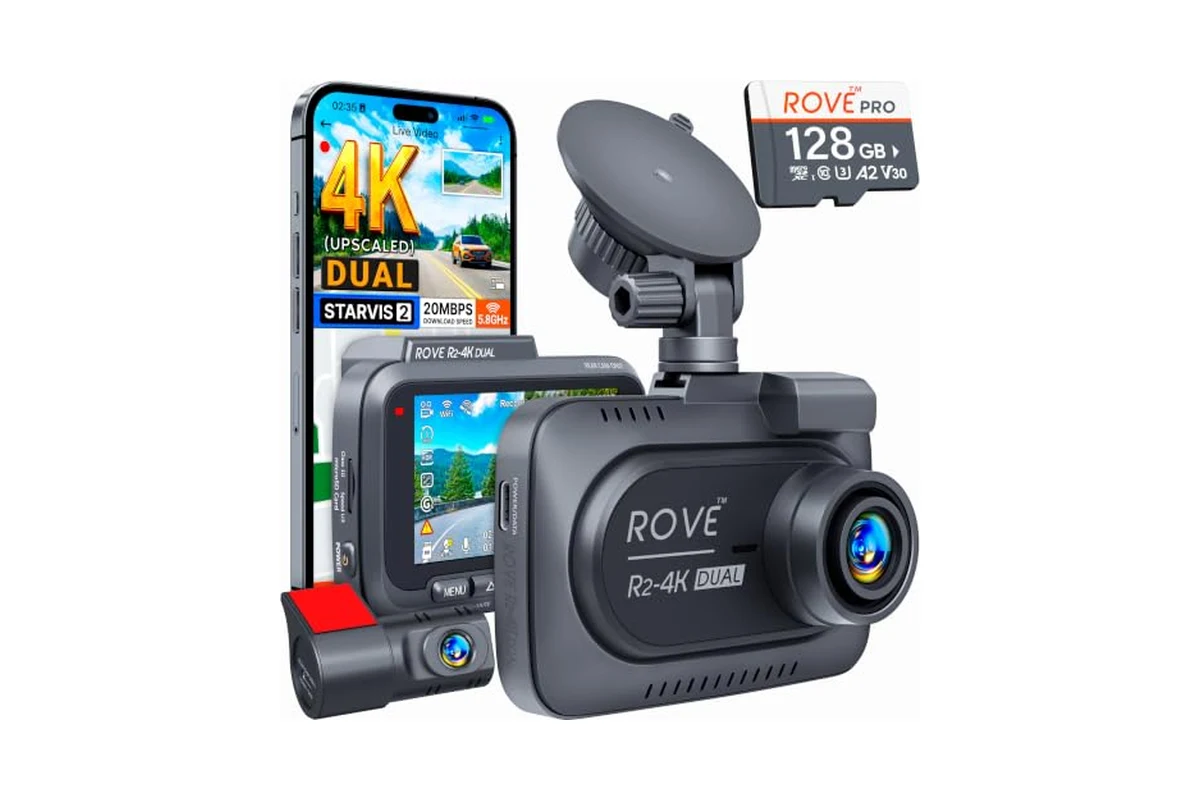
ROVE R2-4K Dual Dash Cam Front and Rear, STARVIS 2 Sensor, Free 128GB Card
ROVE R2-4K Dual Dash Cam: A Balanced Two-Channel Setup
The ROVE R2-4K Dual is a front-and-rear dash cam that aims to cover the two angles most drivers care about: what happens ahead and what happens behind. It combines a Sony STARVIS 2 IMX675 sensor up front with a 1080p rear camera, adds GPS, dual-band WiFi, and includes a 128GB microSD card in the box. If you want a complete two-channel system without hunting for a memory card separately, this is one of the more straightforward options. But there are trade-offs, particularly around the “4K” label and how the parking mode works. Here is what you need to know before buying.
Key specs
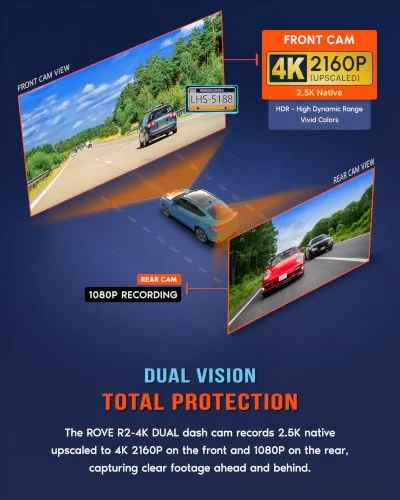
- Front camera: 2.5K QHD native, upscaled to 4K (2160p) for playback
- Rear camera: Full HD 1080p
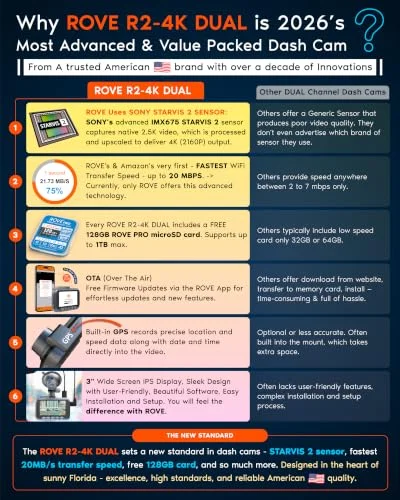
- Front sensor: Sony STARVIS 2 IMX675 5MP, F1.5 aperture, HDR
- Rear aperture: F1.8
- Display: 3-inch IPS screen
- WiFi: Dual-band 5.8GHz and 2.4GHz, up to 20MB/s download speed via ROVE app
- GPS: Built-in, records speed, location, and route; live speed and compass on screen
- Parking mode: 24/7 with time-lapse (1fps), motion detection, and collision detection; requires hardwire kit (not included)
- Storage: Includes ROVE PRO 128GB microSD card; supports up to 1TB
- Power: Built-in supercapacitor (no lithium battery)
- Additional features: G-sensor, loop recording, emergency video lock, motion detection, screen saver, voice guidance, CPL filter ready (optional)
- In the box: Front and rear cameras, 128GB card, dual USB car charger, power cable, data cable, rear cam cable, mounts, clips, trim tool, cleaning wipe
Who is this dash cam for?
The R2-4K Dual makes the most sense for drivers who want a simple, all-in-one two-channel setup with minimal extra shopping. If you have ever bought a dash cam only to realize you need to order a high-endurance microSD card separately, the included 128GB card is a genuine convenience. It is also a good fit for rideshare and delivery drivers who need to document both the road ahead and the cabin behind, though note this is a front-and-rear system, not a cabin-facing one. For those who drive at night or in low-light conditions, the STARVIS 2 sensor and F1.5 aperture are meaningful upgrades over basic 1080p dash cams. The 5.8GHz WiFi is another plus if you regularly pull clips to your phone and do not want to wait around for a slow transfer.
On the other hand, this is not the right camera for someone who insists on native 4K resolution. The front camera records at 2.5K and upscales to 4K for playback. That upscaling can make footage look sharper on a screen, but it does not add real detail the way a native 4K sensor would. If you need the absolute highest resolution for reading plates at long distances, you should look at native 4K models instead. Also, if you want a built-in cabin camera for recording inside the vehicle, this model does not offer that. And if you are not willing to install a hardwire kit, the parking mode will not function, so you would be paying for a feature you cannot use.
Alternatives to consider
Before committing to the ROVE R2-4K Dual, think about what you actually need. If your priority is maximum front resolution, a native 4K dash cam from a brand like Viofo or Thinkware will give you true 4K without upscaling, though you will likely pay more and may need to buy a memory card separately. If you want a three-channel setup that covers front, rear, and cabin, you should look at 3-channel dash cams, which are increasingly common and useful for rideshare drivers who want to record passengers as well as the road. Finally, if you already own a decent 1080p dash cam and just want better night performance, you might consider a single-channel dash cam with a STARVIS 2 sensor and put your budget there instead of replacing everything. Each of these paths has different trade-offs in price, installation complexity, and video quality.
What to check before buying
First, confirm the resolution expectations. The front camera is 2.5K native, upscaled to 4K. That is fine for most daily driving, but if you often need to read license plates from far away in daylight, a native 4K camera will do better. The rear camera is 1080p, which is standard for rear cams and generally adequate for capturing what happens behind you, but do not expect the same level of detail as the front.
Second, think about parking mode. The R2-4K Dual supports 24/7 parking mode with time-lapse, motion detection, and collision detection, but it requires a hardwire kit that is not included. If you park on the street or in a lot where you want surveillance, factor in the cost and effort of hardwiring. If you only park in a garage, you may not need it at all. Also note that parking mode can drain your car battery if not installed with a proper voltage cutoff, so use a quality hardwire kit with a low-voltage protection setting.
Third, check the microSD card situation. The included 128GB card is a nice bonus, but dash cams are hard on memory cards. You should use a high-endurance card designed for constant writing. The ROVE PRO card included is presumably up to that task, but if you plan to upgrade to a larger capacity (up to 1TB is supported), make sure you buy a card rated for dash cam use. Regular cards can fail prematurely in this environment.
Fourth, consider the WiFi and app experience. The 5.8GHz WiFi is faster than 2.4GHz, but not all phones support 5.8GHz. Check your phone’s specs. The ROVE app is used for viewing, downloading, and firmware updates. Some users find app-based workflows convenient, others prefer to pull the card and use a computer. The GPS player for PC and Mac is a nice addition for reviewing footage with speed and location data.
Fifth, installation. The kit includes a trim tool, clips, and both cables, which is helpful. The rear camera cable is typically the longest part of the install and may require routing along the headliner and down the rear pillar. If you are not comfortable removing trim panels, budget for professional installation. The front camera mounts on the windshield, and the rear camera mounts on the rear window. Make sure you have a clear spot for both and that the rear camera has a good view without obstruction from tint or defroster lines.
Finally, think about climate. The built-in supercapacitor is a better choice than a lithium battery for hot climates because it handles high temperatures better. The camera also has thermal protection, but no dash cam is immune to extreme heat. If you live in a very hot area, park in the shade when possible and consider a sunshade.
When this is the right call
The ROVE R2-4K Dual is a solid choice if you want a complete two-channel dash cam with good night performance, GPS, fast WiFi, and a memory card included. It is particularly well-suited for drivers who want a set-it-and-forget-it solution without researching every component. The STARVIS 2 sensor gives it an edge in low light, and the 5.8GHz WiFi makes offloading clips less of a chore. If you are okay with upscaled 4K and do not need a cabin camera, this camera covers the essentials well.
When to look elsewhere
You should skip this model if you need native 4K resolution, if you want a built-in cabin camera, or if you are not prepared to hardwire for parking mode. Also, if you prefer a simpler setup without an app, or if you already have a memory card and want to save money, a bare-bones dash cam might be a better fit. And if you need the absolute best low-light performance, a dedicated single-channel camera with a larger sensor might outperform this dual setup, since dual cameras often split processing power and may have slightly lower front-camera performance than a single-channel equivalent.
Bottom line
The ROVE R2-4K Dual is a well-rounded front-and-rear dash cam that delivers good night footage, convenient WiFi, and a complete package with the included 128GB card. Just go in knowing that the 4K is upscaled, the rear is 1080p, and parking mode needs extra hardware. For many drivers, those trade-offs are acceptable for the price and convenience. Check the current price on Amazon to see if it fits your budget.
Pros and cons
- + Sony STARVIS 2 sensor with F1.5 aperture provides strong low-light performance
- + Includes a 128GB microSD card, so no separate purchase needed
- + Dual-band 5.8GHz WiFi allows fast video downloads to phone
- + Built-in GPS records speed, location, and route data
- + Supercapacitor design handles high temperatures better than lithium batteries
- – Front camera is upscaled 4K, not native 4K, so detail is not as high as true 4K dash cams
- – Parking mode requires a hardwire kit that is not included
- – Rear camera is only 1080p, which is standard but not exceptional
Verdict: The ROVE R2-4K Dual is a convenient, well-equipped two-channel dash cam with excellent night vision and fast WiFi, but its upscaled 4K front and hardwire-dependent parking mode are worth noting before you buy.
Ready to buy
ROVE R2-4K Dual Dash Cam Front and Rear, STARVIS 2 Sensor, Free 128GB Card