Affiliate disclosure: CarGear may earn a commission from qualifying purchases made through the Amazon links in this article, at no extra cost to you.
Where to buy
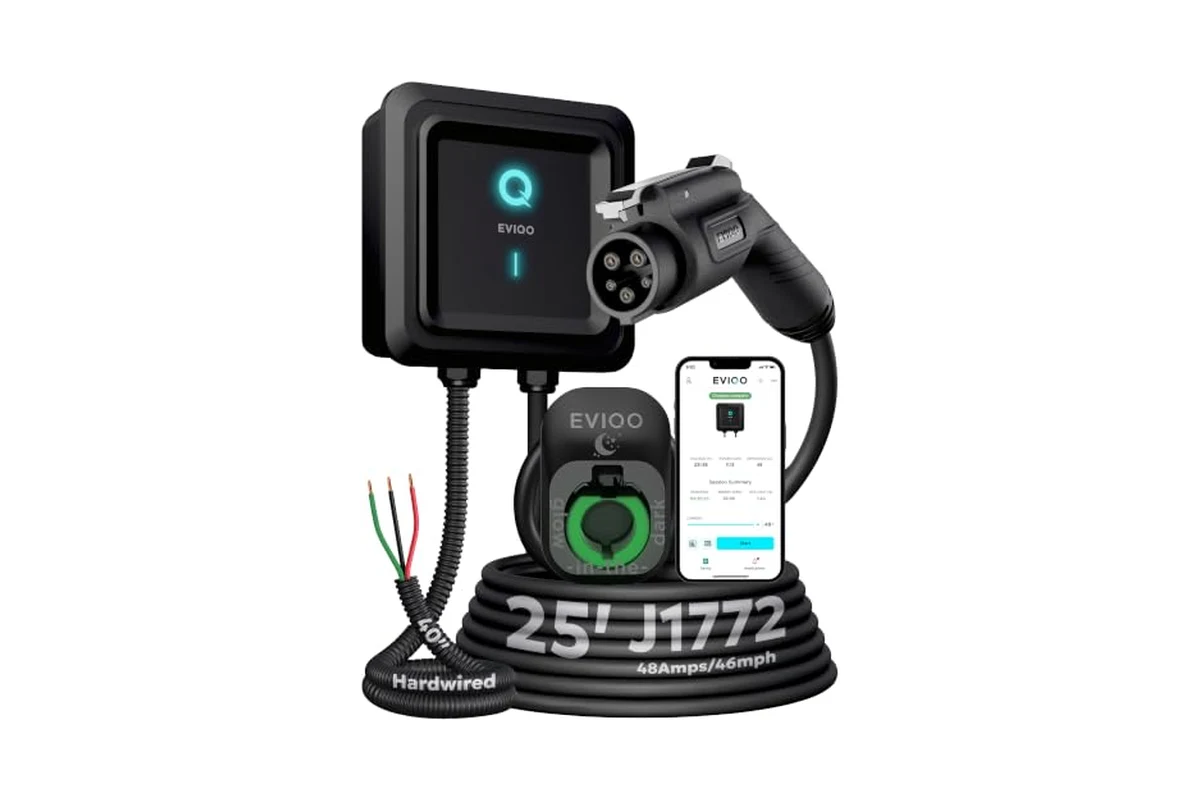
EVIQO Level 2 EV Charger J1772 48A – Hardwired 240V Wall Charging Station
If you own a non-Tesla EV or plug-in hybrid, you already know the drill: the 120V cord that came with the car adds a few miles overnight, and public DC fast charging is fine for road trips but a hassle for Tuesday. A hardwired Level 2 wall station fixes the daily grind. The EVIQO 48A J1772 unit is one of the more straightforward options in that space: a sealed indoor/outdoor box, a long 25 ft cable, app control, and a 48A output on a 60A circuit. It is not a plug-in unit, so this is an electrician job, not a weekend DIY. Here is what living with it actually looks like.
Key specs
- Hardwired 240V Level 2 charging station, up to 48A on a dedicated 60A circuit
- DIP switches 4 and 5 can be set for 50A output on a dedicated 70A circuit
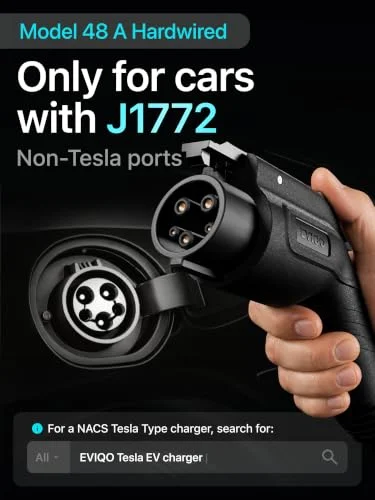
- Standard J1772 connector, works with non-Tesla EVs and plug-in hybrids without an adapter; Tesla vehicles need the J1772 adapter that comes with the car
- 25 ft charging cable
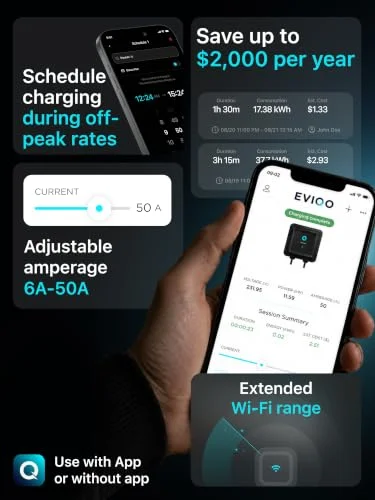
- App control over 2.4 GHz WiFi: start/stop, adjustable current from 6A to 48A, reminders, energy and cost tracking
- IP66 / NEMA 4 sealed housing for indoor or outdoor use
- Certifications listed: UL, ETL, FCC, Energy Star
- Glow-in-the-dark holster for the connector
- Side reset button, over-the-air firmware updates
- 3-year manufacturer warranty, U.S.-based support Mon-Sat 8 AM-4 PM PT
Still deciding?
EVIQO Level 2 EV Charger J1772 48A – Hardwired 240V Wall Charging Station
Installation and everyday use
Let me be blunt about the install: this is a licensed electrician job. Because the unit is hardwired rather than plug-in, there is no NEMA 14-50 plug to simply hang on an existing outlet. The electrician runs a dedicated 240V circuit from your panel, lands the conductors inside the charger, and mounts the unit to the wall. If your panel has room and the run is short, that is often a half-day appointment. If the panel is full, you may be looking at a subpanel or a load management conversation, and the cost climbs from there. The 48A output requires a 60A breaker and appropriately sized wire, so the electrician will size the run to code. The 50A mode via DIP switches 4 and 5 is there if you have a 70A circuit available, but most homes will never need it.
Once it is on the wall, the day-to-day routine is simple. You pull into the garage, grab the connector off the holster, and plug in. The glow-in-the-dark holster sounds like a gimmick until you are docking the plug at 11 PM with your hands full, and then it is genuinely useful. The 25 ft cable is the spec that matters most in real life. A 25 ft reach covers most two-car garages and lets you park nose-in or back-in without dragging the cable across the hood. If you park outside on a driveway, measure from where you plan to mount the box to the charge port on your car in its normal parking spot. Cable length is the number one thing people get wrong when ordering a wall charger.
The app is where the smart features live. You pair the charger to a 2.4 GHz WiFi network, and from there you can start and stop sessions, dial the current down from 48A to as low as 6A, set charging schedules, and see energy and cost tracking per session. Off-peak scheduling is the feature that pays for itself over time if your utility has time-of-use rates. The 6A minimum is also handy if you have a shared circuit or a solar setup where you want to match charging to production. Two things to know: the charger needs a 2.4 GHz network, not 5 GHz, and a weak WiFi signal in a detached garage can make the app flaky. EVIQO lists a stronger built-in antenna specifically for garage and basement installs, which helps, but if your garage is a WiFi dead zone, sort that out before install day.
Build quality feels like what the spec sheet promises. The IP66 / NEMA 4 housing is fully sealed, so rain, snow, dust, and hose-downs are not a concern if you mount it outdoors. Internal steel shielding protects the electronics, which matters in garages that swing between humid summers and freezing winters. The side reset button is a small thing that becomes a big thing the first time the charger needs a restart: you press it, the unit reboots, and you never touch the breaker. Firmware updates arrive over the air, so the charger picks up fixes and features without you doing anything.
Good fit for
- Owners of a non-Tesla EV or plug-in hybrid with a J1772 port who want a permanent home charging setup
- Households with a garage or driveway where the car parks in the same spot every night
- Drivers on time-of-use electric rates who will actually use the scheduling feature
- Anyone who wants an outdoor-rated unit that can handle weather without a separate enclosure
- Two-EV households that need a long cable to reach either parking spot
Skip it if
- You rent, or you are not ready to pay for a dedicated circuit and electrician labor
- Your electrical panel is already at capacity and you do not want to deal with an upgrade
- You want a portable charger you can toss in the trunk for travel
- Your garage WiFi is weak and you rely on app features every day, unless you are willing to add a mesh node or extender first
- You drive a Tesla and do not want to keep track of the J1772 adapter that came with the car
Alternatives to consider
If the hardwired install is a dealbreaker, a plug-in Level 2 charger that runs on a NEMA 14-50 outlet is the obvious alternative. You still need a 240V circuit installed, but the unit itself is a swap-out if it fails or you move, and some renters can negotiate the outlet with a landlord more easily than a hardwired box. The trade-off is usually a lower maximum current, often 40A, and a bulkier plug hanging on the wall.
If you want the fastest possible home charging and your car supports it, a higher-amperage hardwired unit on a 60A or larger circuit is worth comparing. The EVIQO already covers most EVs at 48A, so this mainly matters if you have a vehicle with a large battery and a high onboard charger rating, or if you routinely arrive home near empty and leave early.
If you are deep in one ecosystem, a brand-matched charger can add conveniences like native vehicle integration, automatic charge scheduling tied to the car, or a shared app with your solar system. Those features are real, but they usually cost more and lock you into one brand. A J1772 station like this one is brand-agnostic, which is a quiet advantage if you trade cars or add a second EV later.
Compatibility and what to check before buying
First, confirm your car’s charge port. The EVIQO uses a standard J1772 connector, which covers Ford, Chevrolet, Hyundai, Kia, Nissan, BMW, Volkswagen, Audi, Rivian, Lucid, and essentially every non-Tesla EV and plug-in hybrid sold in the U.S. Tesla drivers can use it with the J1772 adapter that comes with the car, but that is one more thing to keep track of, and some Tesla owners prefer a native connector for that reason.
Second, check your electrical service. A 48A charger needs a dedicated 60A, 240V circuit. That means your panel needs two open breaker slots and enough total capacity to support the added load. If your home has 100A service and a lot of electric appliances, an electrician may recommend load management or a service upgrade. Get a quote before you order, because the install cost can exceed the charger cost depending on your panel and the wire run.
Third, plan the mounting location. You want the unit close enough to the car that the 25 ft cable reaches the charge port with slack, but not so close that the cable drags on the ground or crosses a walking path. If you park outdoors, mount it at a height where the connector holster is comfortable and the cable does not sit in snow or standing water. The IP66 rating handles the weather, but keeping the cable off the ground still extends its life.
Fourth, sort out WiFi before install day. The charger needs a 2.4 GHz network. If your router is at the far end of the house and the garage is a dead zone, add a mesh node or extender first, then install. The app is optional in the sense that the charger will still charge without it, but scheduling, current adjustment, and energy tracking all live there, so a weak signal undercuts a lot of what you paid for.
Finally, budget for the electrician. Hardwired means no plug-and-play, and doing it wrong is a fire risk, not a warranty debate. A licensed electrician who has done EV charger installs before will know the code requirements for your area, size the breaker and wire correctly, and pull any permit your jurisdiction requires. Once it is in, the routine is about as low-effort as home charging gets: plug in, let the schedule do its thing, and check the app when you want to see what a charge cost. Check the current price on Amazon before you commit, since pricing on this category moves around.
Pros and cons
- + 48A hardwired output on a 60A circuit charges most EVs fully overnight, with a 50A option on a 70A circuit
- + Sealed IP66 / NEMA 4 housing and internal steel shielding hold up to garages and outdoor mounting
- + 25 ft cable, glow-in-the-dark holster, and app scheduling are genuinely useful in daily use
- – Hardwired design requires a licensed electrician and a dedicated circuit, so total cost is more than the unit price
- – App features depend on a 2.4 GHz WiFi signal, which can be weak in detached garages
- – Not a portable solution and not ideal for renters or panels that are already at capacity
Verdict: The EVIQO 48A is a solid, no-drama hardwired Level 2 charger for non-Tesla EV owners who park in the same spot every night and want app scheduling without a lot of fuss. Just budget for the electrician and check your panel and WiFi before you order, because those two things decide whether the install is easy or expensive.
Ready to buy
EVIQO Level 2 EV Charger J1772 48A – Hardwired 240V Wall Charging Station